Links
Gallery
Life events
358 BC
Birth in Europos
Seleucus I Nicator was born in Europos, Macedonia, to Antiochus, a general of Philip II of Macedon, and Laodice. His birth marked the beginning of a life that would significantly influence the Hellenistic world.
Seleucus I Nicator was born in Europos, Macedonia, to Antiochus, a general of Philip II of Macedon, and Laodice. His birth marked the beginning of a life that would significantly influence the Hellenistic world.
Wikipedia ↗
334 BC
Participation in Alexander the Great's Campaigns
Seleucus accompanied Alexander the Great as an officer in his campaigns, distinguishing himself in various battles and earning a reputation as a capable military leader.
Seleucus accompanied Alexander the Great as an officer in his campaigns, distinguishing himself in various battles and earning a reputation as a capable military leader.
Wikipedia ↗
326 BC
Battle of the Hydaspes
Seleucus played a key role in the Battle of the Hydaspes against King Porus of India, showcasing his tactical prowess in Alexander's eastern campaigns.
Seleucus played a key role in the Battle of the Hydaspes against King Porus of India, showcasing his tactical prowess in Alexander's eastern campaigns.
Wikipedia ↗
324 BC
Appointment as Commander of the Companion Cavalry
After the death of Hephaestion, Seleucus was appointed commander of the elite Companion Cavalry, a significant promotion within Alexander's army.
After the death of Hephaestion, Seleucus was appointed commander of the elite Companion Cavalry, a significant promotion within Alexander's army.
Wikipedia ↗
323 BC
Babylon Settlement and Division of the Empire
Following Alexander's death in Babylon, Seleucus was appointed satrap of Babylonia during the Partition of Babylon, marking the beginning of his independent rule.
Following Alexander's death in Babylon, Seleucus was appointed satrap of Babylonia during the Partition of Babylon, marking the beginning of his independent rule.
Wikipedia ↗
316 BC
Exile to Egypt
After losing control of Babylonia to Antigonus I Monophthalmus, Seleucus fled to Egypt, seeking refuge and support from Ptolemy I Soter.
After losing control of Babylonia to Antigonus I Monophthalmus, Seleucus fled to Egypt, seeking refuge and support from Ptolemy I Soter.
Wikipedia ↗
312 BC
Battle of Gaza
Seleucus, with the support of Ptolemy, defeated Demetrius Poliorcetes at the Battle of Gaza, allowing him to reclaim Babylonia and establish the Seleucid Empire.
Seleucus, with the support of Ptolemy, defeated Demetrius Poliorcetes at the Battle of Gaza, allowing him to reclaim Babylonia and establish the Seleucid Empire.
Wikipedia ↗
311 BC
Recapture of Babylon
Seleucus successfully reclaimed Babylon, solidifying his control over the region and marking the foundation of the Seleucid Empire.
Seleucus successfully reclaimed Babylon, solidifying his control over the region and marking the foundation of the Seleucid Empire.
Wikipedia ↗
305 BC
Campaigns in India
Seleucus launched campaigns into India, confronting Chandragupta Maurya. The conflict ended with a treaty and a marriage alliance, expanding Seleucid influence.
Seleucus launched campaigns into India, confronting Chandragupta Maurya. The conflict ended with a treaty and a marriage alliance, expanding Seleucid influence.
Wikipedia ↗
305 BC
Coronation as King
Seleucus officially declared himself king, adopting the title 'Nicator' (the Victor) and establishing the Seleucid dynasty as a major power in the Hellenistic world.
Seleucus officially declared himself king, adopting the title 'Nicator' (the Victor) and establishing the Seleucid dynasty as a major power in the Hellenistic world.
Wikipedia ↗
300 BC
Foundation of Antioch
Seleucus founded the city of Antioch, which would become one of the most important centers of the Hellenistic world and the capital of the Seleucid Empire.
Seleucus founded the city of Antioch, which would become one of the most important centers of the Hellenistic world and the capital of the Seleucid Empire.
Wikipedia ↗
281 BC
Battle of Corupedium
Seleucus defeated Lysimachus at the Battle of Corupedium, eliminating one of his last rivals and consolidating his control over much of Alexander's former empire.
Seleucus defeated Lysimachus at the Battle of Corupedium, eliminating one of his last rivals and consolidating his control over much of Alexander's former empire.
Wikipedia ↗
281 BC
Assassination in Lysimachia
Seleucus I Nicator was assassinated by Ptolemy Ceraunus near Lysimachia, ending his reign and marking the decline of the unified Seleucid Empire.
Seleucus I Nicator was assassinated by Ptolemy Ceraunus near Lysimachia, ending his reign and marking the decline of the unified Seleucid Empire.
Wikipedia ↗
Article
Life Summary
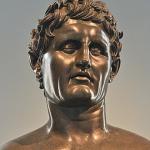
Seleucus I Nicator (c. 358 BCE – 281 BCE) was a Macedonian Greek general and one of the Diadochi (successors) of Alexander the Great. Born in Europos, Macedonia, he served as an officer in Alexander’s campaigns, distinguishing himself in the conquest of the Persian Empire. After Alexander’s death in 323 BCE, Seleucus initially received the satrapy of Babylon in the Partition of Babylon. Through a series of wars, including the Wars of the Diadochi, he expanded his territory, defeating rivals like Antigonus I Monophthalmus and securing control over much of Alexander’s eastern conquests. In 305 BCE, he declared himself king, founding the Seleucid Empire, which stretched from Anatolia to the Indus River. He established key cities, including Antioch and Seleucia, and promoted Hellenistic culture. Seleucus was assassinated in 281 BCE by Ptolemy Ceraunus, a rival claimant to the Macedonian throne.
Historical Context
Seleucus I Nicator rose to power during the turbulent period following Alexander the Great’s death, a time marked by the fragmentation of his vast empire. The Wars of the Diadochi (322–281 BCE) saw Alexander’s generals vie for control, leading to the formation of several Hellenistic kingdoms. Seleucus’s empire became one of the most enduring, bridging Greek and Near Eastern cultures. His reign was pivotal in spreading Hellenistic influence across Mesopotamia, Persia, and parts of India, facilitating cultural and economic exchanges. The Seleucid Empire’s vast territory and strategic cities made it a dominant power in the ancient world, shaping the political and cultural landscape of the Near East for centuries.
Beliefs
Seleucus I Nicator was a proponent of Hellenistic culture, blending Greek traditions with local customs in his empire. He promoted the worship of Greek gods alongside local deities and encouraged the adoption of Greek language and customs. His policies reflected a pragmatic approach to governance, seeking to unify diverse populations under a Hellenistic framework while maintaining stability through military strength and administrative efficiency.
Key Achievements
- Founded the Seleucid Empire: Established one of the largest Hellenistic kingdoms, ruling over Mesopotamia, Persia, and parts of India.
- Victory in the Wars of the Diadochi: Defeated rivals like Antigonus I Monophthalmus and Lysimachus, securing his dominance in the Near East.
- Founded Key Cities: Established Antioch (modern-day Antakya, Turkey) and Seleucia (near Baghdad, Iraq) as major cultural and economic centers.
- Military Campaigns in India: Concluded a treaty with Chandragupta Maurya, gaining control of territories in the Indus Valley in exchange for war elephants.
- Administrative Reforms: Organized his empire into satrapies, blending Persian administrative practices with Greek governance.
- Promoted Hellenistic Culture: Encouraged the spread of Greek language, art, and architecture, fostering cultural syncretism in his empire.
- Dynastic Marriages: Strengthened alliances through marriages, such as his union with Apama, a Sogdian noblewoman, and later with Stratonice, daughter of Demetrius Poliorcetes.