Links
Life events
AD 1470
Birth in Amasya
Selim I was born in Amasya, then part of the Ottoman Empire, to Sultan Bayezid II and Gülbahar Hatun. His birth marked the beginning of a lineage that would expand the empire significantly.
Selim I was born in Amasya, then part of the Ottoman Empire, to Sultan Bayezid II and Gülbahar Hatun. His birth marked the beginning of a lineage that would expand the empire significantly.
Wikipedia ↗
AD 1487
Governorship of Trabzon
Selim was appointed as the governor of Trabzon, where he gained military experience and prepared for his future role as sultan. His governance here was marked by efforts to secure the eastern frontier.
Selim was appointed as the governor of Trabzon, where he gained military experience and prepared for his future role as sultan. His governance here was marked by efforts to secure the eastern frontier.
Wikipedia ↗
AD 1512
Forced Abdication of Bayezid II
Selim forced his father, Bayezid II, to abdicate the throne after a power struggle among his sons. This event marked the beginning of Selim's reign as the Sultan of the Ottoman Empire.
Selim forced his father, Bayezid II, to abdicate the throne after a power struggle among his sons. This event marked the beginning of Selim's reign as the Sultan of the Ottoman Empire.
Wikipedia ↗
AD 1512
Coronation in Constantinople
Selim I was officially crowned as the Sultan of the Ottoman Empire in Constantinople (modern-day Istanbul). His reign would be characterized by rapid territorial expansion.
Selim I was officially crowned as the Sultan of the Ottoman Empire in Constantinople (modern-day Istanbul). His reign would be characterized by rapid territorial expansion.
Wikipedia ↗
AD 1514
Battle of Chaldiran
Selim I defeated Shah Ismail I of the Safavid Empire at the Battle of Chaldiran, securing eastern Anatolia and curbing Safavid influence. This battle marked a significant shift in regional power dynamics.
Selim I defeated Shah Ismail I of the Safavid Empire at the Battle of Chaldiran, securing eastern Anatolia and curbing Safavid influence. This battle marked a significant shift in regional power dynamics.
Wikipedia ↗
AD 1516
Battle of Marj Dabiq
Selim I defeated the Mamluk Sultanate at the Battle of Marj Dabiq, near Aleppo. This victory marked the beginning of Ottoman dominance over Syria and the Levant.
Selim I defeated the Mamluk Sultanate at the Battle of Marj Dabiq, near Aleppo. This victory marked the beginning of Ottoman dominance over Syria and the Levant.
Wikipedia ↗
AD 1516
Campaign in the Levant
Selim I led a military campaign into the Levant, consolidating Ottoman control over the region and preparing for the eventual conquest of Egypt and the holy cities.
Selim I led a military campaign into the Levant, consolidating Ottoman control over the region and preparing for the eventual conquest of Egypt and the holy cities.
Wikipedia ↗
AD 1517
Conquest of Cairo
Selim I captured Cairo, effectively ending the Mamluk Sultanate and bringing Egypt under Ottoman control. This victory solidified Ottoman power in the Middle East.
Selim I captured Cairo, effectively ending the Mamluk Sultanate and bringing Egypt under Ottoman control. This victory solidified Ottoman power in the Middle East.
Wikipedia ↗
AD 1517
Control of Mecca and Medina
Following the conquest of Egypt, Selim I gained control of the holy cities of Mecca and Medina, assuming the title of Custodian of the Two Holy Mosques and enhancing Ottoman prestige in the Islamic world.
Following the conquest of Egypt, Selim I gained control of the holy cities of Mecca and Medina, assuming the title of Custodian of the Two Holy Mosques and enhancing Ottoman prestige in the Islamic world.
Wikipedia ↗
AD 1520
Death in Constantinople
Selim I died in Constantinople due to an illness, possibly anthrax. His death marked the end of a reign that had significantly expanded the Ottoman Empire's territory and influence.
Selim I died in Constantinople due to an illness, possibly anthrax. His death marked the end of a reign that had significantly expanded the Ottoman Empire's territory and influence.
Wikipedia ↗
Article
Life Summary
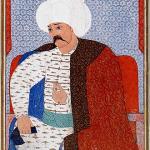
Selim I, also known as Selim the Grim or Selim the Resolute, was born on October 10, 1470, in Amasya, Ottoman Empire. He was the son of Sultan Bayezid II and Gülbahar Hatun. Selim spent his early years in Trabzon, where he gained administrative and military experience. He ascended to the Ottoman throne in 1512 after forcing his father to abdicate in a coup. Selim's reign was marked by military campaigns and significant territorial expansion. He defeated the Safavids at the Battle of Chaldiran in 1514, securing eastern Anatolia. In 1516-1517, he conquered the Mamluk Sultanate, bringing Syria, Palestine, Egypt, and the Hejaz under Ottoman control. Selim died on September 22, 1520, near Çorlu, possibly from an infection or cancer.
Historical Context
Selim I ruled during a pivotal period in Ottoman history, characterized by the empire's transformation into a dominant world power. The early 16th century saw the Ottomans clashing with the Safavid Persians, who adhered to Shia Islam, while the Ottomans followed Sunni Islam. This religious divide fueled the conflict between the two empires. Selim's conquest of the Mamluk Sultanate not only expanded Ottoman territory but also allowed the empire to control the holy cities of Mecca and Medina, enhancing its prestige in the Islamic world. Selim's reign set the stage for the golden age of the Ottoman Empire under his son, Suleiman the Magnificent. His military campaigns and administrative reforms solidified the empire's position as a major geopolitical force.
Beliefs
Selim I was a devout Sunni Muslim and saw himself as the defender of Sunni Islam against the Shia Safavids. His military campaigns were often framed in religious terms, particularly his conflicts with the Safavid Shah Ismail I. Selim's conquest of the Mamluk Sultanate allowed him to claim the title of Caliph, positioning himself as the leader of the Islamic world. He was also known for his strict and uncompromising nature, earning him the epithet "the Grim."
Key Achievements
- Military Expansion: Successfully led campaigns that expanded the Ottoman Empire into eastern Anatolia, Syria, Palestine, Egypt, and the Hejaz.
- Battle of Chaldiran (1514): Defeated the Safavid Persians, securing Ottoman control over eastern Anatolia and parts of Kurdistan.
- Conquest of the Mamluk Sultanate (1516-1517): Brought Syria, Palestine, Egypt, and the holy cities of Mecca and Medina under Ottoman rule.
- Claim to the Caliphate: Assumed the title of Caliph of Islam after the conquest of the Mamluk Sultanate, enhancing the Ottoman Empire's religious authority.
- Administrative Reforms: Strengthened the Ottoman bureaucracy and military, laying the groundwork for the empire's golden age under Suleiman the Magnificent.
- Naval Expansion: Developed the Ottoman navy, which became a dominant force in the Mediterranean and Red Sea.
- Cultural Patronage: Promoted the arts and architecture, contributing to the cultural flourishing of the Ottoman Empire.