Links
Life events
Wikipedia ↗
Wikipedia ↗
Wikipedia ↗
Wikipedia ↗
Wikipedia ↗
Wikipedia ↗
Wikipedia ↗
Wikipedia ↗
Article
Life Summary
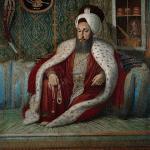
Selim III was born on December 24, 1761, in Constantinople (modern-day Istanbul), the son of Sultan Mustafa III. He ascended to the Ottoman throne on April 7, 1789, following the death of his uncle, Abdul Hamid I. Selim III inherited an empire in decline, facing military defeats, economic struggles, and internal corruption. His reign was marked by ambitious reforms aimed at revitalizing the Ottoman state, particularly through the modernization of its military and administrative systems.
Selim III’s early life was spent in the confines of the palace, where he received a traditional Islamic education but also developed an interest in Western science, music, and military tactics. His exposure to European ideas influenced his later reformist policies. Upon becoming sultan, he immediately faced the challenges of the ongoing Russo-Turkish War (1787–1792) and the threat of Napoleon’s expansion into Ottoman territories.
His most significant reform was the establishment of the Nizam-ı Cedid (New Order), a modernized army trained and equipped according to European standards. This initiative included the creation of new military schools, the adoption of Western-style uniforms, and the hiring of European advisors. However, these reforms faced strong opposition from conservative factions, including the Janissaries, who saw their privileges threatened. The Janissaries, along with religious leaders and provincial governors, resisted Selim III’s changes, leading to widespread unrest.
In 1807, a Janissary revolt deposed Selim III, and he was imprisoned in the palace. His cousin, Mustafa IV, was installed as sultan. Selim III’s brief restoration in 1808 was cut short when he was assassinated on July 28, 1808, on the orders of Mustafa IV, who feared Selim’s potential return to power. Selim III’s death marked the end of his reformist era, though his ideas would later influence the Tanzimat reforms of the 19th century.
Historical Context
Selim III ruled during a critical period in Ottoman history, often referred to as the era of decline. The empire had suffered territorial losses, military defeats, and economic stagnation, particularly in the face of rising European powers. The Ottoman Empire was increasingly seen as the "sick man of Europe," and its survival depended on internal reforms and adaptation to the changing geopolitical landscape.
The late 18th century was a time of significant transformation in Europe, with the Industrial Revolution, the French Revolution, and the rise of Napoleon Bonaparte reshaping the continent’s political and military dynamics. Selim III recognized the need for the Ottoman Empire to modernize to compete with these powers. His reforms were inspired by European models, particularly in military organization and technology, reflecting a broader trend of Westernization in the Ottoman elite.
However, Selim III’s reforms faced fierce resistance from entrenched interests, particularly the Janissaries, who had long been the backbone of the Ottoman military but had become corrupt and ineffective. The Janissaries, along with conservative religious leaders, saw Selim’s changes as a threat to their power and the traditional order. This resistance highlighted the deep divisions within Ottoman society between reformists and conservatives, a tension that would persist throughout the 19th century.
Selim III’s reign also coincided with the rise of nationalist movements in the Balkans and the Middle East, further destabilizing the empire. His efforts to centralize power and modernize the state were ultimately undermined by these internal and external pressures. Despite his failure to fully implement his reforms, Selim III is remembered as a visionary leader who recognized the need for change and laid the groundwork for future Ottoman modernization efforts.
Beliefs
Selim III was a patron of the arts and sciences, with a deep appreciation for both Islamic and Western traditions. He believed in the necessity of reform to preserve the Ottoman Empire’s sovereignty and strength. His worldview was shaped by the idea that the empire could only survive by adopting European military and administrative practices while maintaining its Islamic identity. Selim III was also a devout Muslim, and his reforms were often framed within the context of Islamic jurisprudence to gain broader acceptance.
Key Achievements
- Establishment of the Nizam-ı Cedid (New Order): Created a modernized army trained and equipped according to European standards, including new military schools and Western-style uniforms.
- Military Reforms: Hired European advisors to train Ottoman troops and introduced new tactics and technologies to strengthen the empire’s defenses.
- Administrative Reforms: Attempted to centralize and streamline the Ottoman bureaucracy, reducing corruption and improving efficiency.
- Economic Initiatives: Sought to stabilize the Ottoman economy by reforming tax collection and encouraging trade with European powers.
- Cultural Patronage: Supported the arts, music, and literature, fostering a cultural renaissance in the Ottoman court.
- Diplomatic Efforts: Strengthened diplomatic ties with European powers, including France and Britain, to counterbalance Russian and Austrian influence.
- Education Reforms: Established new schools to promote Western science and military education among Ottoman elites.
- Infrastructure Development: Initiated projects to improve infrastructure, including roads and fortifications, to support military and economic goals.