Links
Life events
Wikipedia ↗
Wikipedia ↗
Wikipedia ↗
Wikipedia ↗
Wikipedia ↗
Wikipedia ↗
Wikipedia ↗
Wikipedia ↗
Article
Life Summary
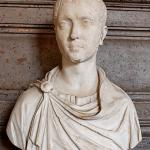
Marcus Aurelius Severus Alexander, commonly known as Severus Alexander, was born on October 1, 208 CE, in Arca Caesarea, Phoenicia (modern-day Arqa, Lebanon). He was the cousin and adopted heir of Emperor Elagabalus, ascending to the throne in 222 CE at the age of 13 after Elagabalus's assassination. His grandmother, Julia Maesa, played a crucial role in securing his succession, and his mother, Julia Mamaea, acted as his regent and advisor during his early reign.
Severus Alexander's rule was marked by an emphasis on moderation, justice, and administrative reform. He sought to reverse the excesses of Elagabalus's reign, restoring dignity to the imperial office and promoting religious tolerance. His court was known for its intellectual and cultural vibrancy, attracting scholars and philosophers. However, his reign was also plagued by military challenges, including conflicts with the Sassanid Empire and Germanic tribes.
In 235 CE, Severus Alexander and his mother were assassinated by mutinous soldiers in Mogontiacum (modern-day Mainz, Germany), led by Maximinus Thrax, who then seized the throne. His death marked the end of the Severan dynasty and the beginning of the Crisis of the Third Century, a period of instability and fragmentation in the Roman Empire.
Historical Context
Severus Alexander ruled during a pivotal period in Roman history, as the empire faced growing external threats and internal instability. The Severan dynasty, which he represented, had been established by Septimius Severus in 193 CE and was characterized by military strength and administrative reforms. However, the reigns of his predecessors, particularly Elagabalus, were marked by scandal and excess, which Severus Alexander sought to correct.
His reign occurred during a time of increasing pressure on Rome's frontiers. The Sassanid Empire, under Ardashir I, posed a significant threat in the East, while Germanic tribes, such as the Alamanni and Goths, began to encroach on the northern borders. Severus Alexander's efforts to negotiate with these groups, rather than engage in outright warfare, were seen as weak by some in the military, contributing to his eventual downfall.
Despite the challenges, Severus Alexander's reign is often viewed as a brief period of stability and moderation in an otherwise turbulent era. His assassination marked the beginning of the Crisis of the Third Century, a 50-year period during which the empire nearly collapsed under the weight of civil wars, barbarian invasions, and economic instability.
Beliefs
Severus Alexander was known for his philosophical inclinations and adherence to Stoic principles. He was deeply influenced by the teachings of philosophers such as Epictetus and sought to rule with wisdom, justice, and moderation. He was also a patron of the arts and sciences, fostering a cultural renaissance in Rome.
Religiously, Severus Alexander was tolerant of various faiths, including Christianity, which was gaining prominence during his reign. According to the historian Eusebius, he even considered building a temple to Christ but was dissuaded by pagan priests. His mother, Julia Mamaea, was said to have been interested in Christian teachings and invited the theologian Origen to Antioch for discussions.
Key Achievements
- Administrative Reforms: Severus Alexander implemented policies to reduce corruption and improve the efficiency of the imperial bureaucracy. He reformed the tax system to alleviate the burden on the poor and promoted fairer legal practices.
- Military Campaigns: While he preferred diplomacy, he successfully defended Rome's eastern frontier against the Sassanid Empire in 232-233 CE, securing a temporary peace.
- Cultural Patronage: He supported the arts and sciences, fostering a cultural revival in Rome. His court attracted scholars, philosophers, and artists, contributing to the intellectual life of the empire.
- Religious Tolerance: Severus Alexander promoted religious tolerance, allowing Christians and other minority groups to practice their faith without persecution. This policy contrasted with the more repressive measures of some of his predecessors.
- Infrastructure Projects: He oversaw the construction and repair of public works, including roads, aqueducts, and temples, improving the quality of life for Roman citizens.
- Legal Reforms: He strengthened the legal system, ensuring fairer trials and reducing the influence of corrupt officials. His legal reforms had a lasting impact on Roman jurisprudence.