Links
Life events
Wikipedia ↗
Wikipedia ↗
Wikipedia ↗
Wikipedia ↗
Wikipedia ↗
Wikipedia ↗
Wikipedia ↗
Article
Life Summary
Shilhak-Inshushinak I was a king of the Elamite Empire, ruling from approximately 1150 to 1120 BCE. He was a member of the Shutrukid dynasty and succeeded his brother, Kutir-Nahhunte III. Shilhak-Inshushinak is known for his military campaigns, which expanded Elamite territory, and his extensive building projects in the capital city of Susa. His reign marked a period of significant cultural and political flourishing for Elam. He died around 1120 BCE, leaving behind a legacy of architectural and administrative advancements.
Historical Context
Shilhak-Inshushinak ruled during the late Bronze Age, a period characterized by the decline of major powers such as the Hittite Empire and Kassite Babylonia. The power vacuum allowed smaller states like Elam to rise in prominence. Elam, located in what is now southwestern Iran, had long been a rival of Mesopotamia. Shilhak-Inshushinak’s reign is notable for its military successes against Babylon and Assyria, as well as its cultural achievements, including the promotion of the Elamite language and script. His rule represents a high point in Elamite history before the empire’s eventual decline and conquest by the Neo-Assyrian Empire.
Beliefs
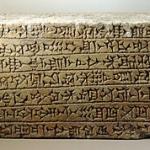
Shilhak-Inshushinak, like other Elamite rulers, adhered to the polytheistic religion of Elam, which included deities such as Inshushinak (the patron god of Susa), Napirisha, and Kiririsha. He often invoked these gods in his inscriptions and dedicated temples and monuments to them. His religious practices were intertwined with his political rule, as he used divine favor to legitimize his authority and military campaigns.
Key Achievements
- Expanded the Elamite Empire through military campaigns against Babylon and Assyria.
- Commissioned extensive building projects in Susa, including temples and monuments.
- Promoted the use of the Elamite language and script, contributing to the preservation of Elamite culture.
- Restored and enhanced the ziggurat at Chogha Zanbil, a UNESCO World Heritage Site.
- Strengthened Elamite administrative systems, leaving behind detailed inscriptions and records.
- Fostered trade and diplomatic relations with neighboring regions, enhancing Elam’s economic prosperity.
- Left a significant legacy in Elamite art and architecture, influencing later Mesopotamian and Iranian cultures.