Links
Life events
Wikipedia ↗
Wikipedia ↗
Wikipedia ↗
Wikipedia ↗
Wikipedia ↗
Wikipedia ↗
Wikipedia ↗
Wikipedia ↗
Article
Life Summary
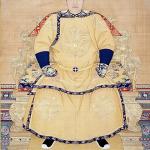
The Shunzhi Emperor, born Aisin Gioro Fulin on March 15, 1638, was the third son of Hong Taiji, the second ruler of the Qing dynasty. He ascended to the throne at the age of five in 1643 following his father's death, with his reign officially beginning in 1644. Due to his young age, his reign was initially dominated by regents, most notably Dorgon, his uncle, who played a crucial role in the Qing conquest of Ming China. The Qing forces, under Dorgon's leadership, captured Beijing in 1644, and the Shunzhi Emperor was installed as the emperor of China, marking the beginning of Qing rule over China proper.
As he matured, the Shunzhi Emperor sought to assert his authority and reduce the influence of the regents. He took personal control of the government in 1650 after Dorgon's death. His reign saw efforts to consolidate Qing power, stabilize the empire, and adopt Chinese administrative practices. The emperor was known for his intellectual curiosity, patronage of the arts, and interest in Chinese culture. He also faced challenges, including resistance from Ming loyalists and internal power struggles.
The Shunzhi Emperor's personal life was marked by tragedy. His beloved consort, Empress Xiaoxian, died in 1658, which deeply affected him. He contracted smallpox in 1661 and died on February 5, 1661, at the age of 22. He was succeeded by his third son, Xuanye, who became the Kangxi Emperor.
Historical Context
The Shunzhi Emperor's reign occurred during a pivotal period in Chinese history, marked by the transition from the Ming dynasty to the Qing dynasty. The Ming dynasty, which had ruled China for nearly three centuries, was weakened by internal corruption, financial crises, and peasant uprisings. The Manchus, a Tungusic people from northeast China, had been expanding their power under the leadership of Nurhaci and his son Hong Taiji, who established the Qing dynasty in 1636.
The fall of Beijing to rebel forces led by Li Zicheng in 1644 created an opportunity for the Qing to intervene. With the help of the Ming general Wu Sangui, the Qing forces defeated Li Zicheng and captured Beijing. The Shunzhi Emperor was then installed as the emperor of China, symbolizing the Qing's claim to the Mandate of Heaven. His reign was crucial in legitimizing Qing rule and integrating Manchu and Chinese governance systems. The Shunzhi Emperor's adoption of Chinese cultural and administrative practices helped to ease the transition and gain the support of the Han Chinese elite.
Beliefs
The Shunzhi Emperor was raised in a multicultural environment, influenced by both Manchu traditions and Chinese Confucian values. He was known to be a patron of Buddhism and showed a keen interest in Chinese literature, calligraphy, and painting. His reign saw efforts to reconcile Manchu and Han Chinese cultures, reflecting his belief in the importance of cultural integration for the stability of the empire. He also supported the spread of Tibetan Buddhism, which played a significant role in Manchu spiritual life.
Key Achievements
- Consolidation of Qing Rule: Successfully transitioned the Qing dynasty from a regional power to the ruling dynasty of China proper, establishing Beijing as the capital.
- Centralization of Power: Took personal control of the government in 1650, reducing the influence of regents and strengthening imperial authority.
- Adoption of Chinese Administrative Practices: Integrated Chinese bureaucratic systems into the Qing government, facilitating smoother governance and acceptance by the Han Chinese elite.
- Cultural Patronage: Promoted Chinese arts, literature, and Confucian scholarship, fostering cultural exchange between Manchu and Han traditions.
- Military Campaigns: Oversaw military campaigns to suppress Ming loyalists and rebel forces, securing Qing control over southern China.
- Religious Tolerance: Supported the spread of Buddhism, including Tibetan Buddhism, and maintained policies of religious tolerance within the empire.
- Infrastructure Development: Initiated projects to repair and expand infrastructure, including the restoration of the Grand Canal, which was vital for transportation and grain shipment.
- Diplomatic Relations: Established diplomatic ties with neighboring regions and foreign powers, including Russia, to secure Qing borders and trade interests.