Links
Life events
Wikipedia ↗
Wikipedia ↗
Wikipedia ↗
Wikipedia ↗
Wikipedia ↗
Wikipedia ↗
Wikipedia ↗
Wikipedia ↗
Wikipedia ↗
Article
Life Summary
Shutruk-Nahhunte was a king of the Elamite Empire who reigned from approximately 1184 to 1155 BCE. He ascended to the throne during a period of Elamite resurgence and is best known for his military campaigns against Mesopotamia, particularly his invasion of Babylon. His conquests led to the downfall of the Kassite dynasty, which had ruled Babylon for centuries. Shutruk-Nahhunte’s reign marked a peak in Elamite power, though his empire would later decline after his death. Little is known about his early life, but his military and political strategies left a lasting impact on the region. He died around 1155 BCE, succeeded by his son, Kutir-Nahhunte.
Historical Context
Shutruk-Nahhunte ruled during the late Bronze Age, a time of significant upheaval in the ancient Near East. The Elamite Empire, centered in what is now southwestern Iran, had long been a rival to the Mesopotamian powers, including Babylon and Assyria. The Kassite dynasty, which had controlled Babylon for nearly 400 years, was weakening due to internal strife and external pressures. Shutruk-Nahhunte capitalized on this instability, launching a series of military campaigns that culminated in the sack of Babylon. His conquests brought Elamite influence to its zenith, though his empire’s dominance was short-lived. The fall of the Kassites under his rule marked a turning point in Mesopotamian history, paving the way for new dynasties and power struggles in the region.
Beliefs
Shutruk-Nahhunte, like other Elamite rulers, worshipped a pantheon of deities that included Inshushinak, the chief god of Susa, and Napirisha, a major Elamite god. His inscriptions and monuments reflect a belief in divine favor, with many of his military successes attributed to the support of these gods. The Elamites practiced a syncretic religion, blending their own traditions with those of neighboring cultures, including Mesopotamia. Shutruk-Nahhunte’s devotion to these deities was likely a key aspect of his legitimacy as a ruler, as he sought to align his conquests with divine will.
Key Achievements
- Conquest of Babylon: Led a successful military campaign that resulted in the sack of Babylon and the end of the Kassite dynasty (c. 1158 BCE).
- Expansion of Elamite Territory: Extended Elamite control over large parts of Mesopotamia, including regions in modern-day Iraq and Iran.
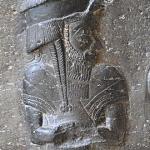
- Cultural and Artistic Patronage: Commissioned numerous inscriptions and monuments, including the famous "Victory Stele of Shutruk-Nahhunte," which celebrated his military triumphs.
- Dynastic Consolidation: Strengthened the Elamite royal line by securing the succession of his son, Kutir-Nahhunte, ensuring continuity of power.
- Looting of Babylonian Treasures: Removed significant artifacts from Babylon, including the Stele of Hammurabi, which was later rediscovered in Susa.
- Military Innovations: Utilized advanced military strategies and technologies, such as chariots and composite bows, to achieve his conquests.
- Diplomatic Influence: Established Elam as a dominant power in the region, forcing neighboring states to acknowledge its authority.