Links
Life events
Wikipedia ↗
Wikipedia ↗
Wikipedia ↗
Wikipedia ↗
Wikipedia ↗
Wikipedia ↗
Wikipedia ↗
Wikipedia ↗
Article
Life Summary
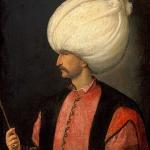
Suleiman I, known as Suleiman the Magnificent in the West and Kanunî Sultan Süleyman ("The Lawgiver") in the East, was born on November 6, 1494, in Trabzon, Ottoman Empire. He was the only son of Sultan Selim I and Hafsa Sultan. Suleiman ascended to the throne in 1520 after his father's death and ruled for 46 years until his death on September 6, 1566, during the Siege of Szigetvár in Hungary.
Suleiman's early life was marked by a rigorous education in science, history, literature, theology, and military tactics. He was well-versed in multiple languages, including Arabic, Persian, Serbian, and Chagatai. His reign began with the suppression of a revolt led by the Ottoman governor of Damascus, and he quickly moved to consolidate and expand Ottoman power.
Suleiman's military campaigns were extensive and successful. He led 13 major military expeditions, personally commanding the army in 10 of them. His conquests included Belgrade (1521), Rhodes (1522), most of Hungary (1526), and parts of Persia, Iraq, and North Africa. His naval forces, led by admirals like Hayreddin Barbarossa, dominated the Mediterranean.
Suleiman was also a patron of the arts and culture. His reign saw the flourishing of Ottoman architecture, literature, and art. He commissioned the renowned architect Mimar Sinan to build numerous mosques, bridges, and other public works, including the Süleymaniye Mosque in Istanbul.
Suleiman died of natural causes during the Siege of Szigetvár in 1566. His death was kept secret for a time to maintain morale among his troops. He was succeeded by his son Selim II.
Historical Context
Suleiman's reign marked the peak of the Ottoman Empire's military, political, and economic power. The empire stretched from Hungary in the north to Yemen in the south, and from Algeria in the west to Iraq in the east. This period, often referred to as the "Golden Age" of the Ottoman Empire, saw significant advancements in law, literature, art, and architecture.
The Ottoman Empire under Suleiman was a major player in European politics. His rivalry with the Habsburgs, particularly Charles V, Holy Roman Emperor, shaped the geopolitical landscape of the 16th century. The Ottomans were seen as a formidable threat to Christian Europe, and Suleiman's military campaigns in Europe were both feared and respected.
Suleiman's legal reforms earned him the title "The Lawgiver." He codified a centralized legal system that balanced Islamic law (Sharia) with secular laws (Kanun), which governed issues like taxation, criminal law, and land tenure. These reforms had a lasting impact on the empire's administration and justice system.
Culturally, Suleiman's reign was a period of great artistic and intellectual achievement. The empire became a melting pot of cultures, attracting scholars, artists, and craftsmen from across the Islamic world and beyond. Istanbul, the capital, became a center of learning and culture, rivaling other great cities of the time.
Beliefs
Suleiman was a devout Muslim and saw himself as the defender of the Islamic faith. He believed in the concept of "Ghazi," or holy warrior, and saw his military campaigns as part of a divine mission to spread Islam. Despite his religious convictions, he was known for his tolerance towards other religions, particularly Christians and Jews, within his empire. This tolerance was partly pragmatic, as it helped maintain stability and loyalty among his diverse subjects.
Suleiman was also a strong believer in justice and good governance. His legal reforms were aimed at ensuring fairness and equity for all his subjects, regardless of their religion or social status. He was known to personally oversee the administration of justice and was accessible to his subjects through a system of petitions.
Key Achievements
- Military Conquests: Expanded the Ottoman Empire to its greatest territorial extent, including the conquests of Belgrade, Rhodes, Hungary, and parts of Persia and North Africa.
- Naval Dominance: Established Ottoman control over the Mediterranean through naval victories and the leadership of admirals like Hayreddin Barbarossa.
- Legal Reforms: Codified a comprehensive legal system that balanced Islamic and secular laws, earning him the title "The Lawgiver."
- Architectural Legacy: Commissioned numerous public works, including the Süleymaniye Mosque in Istanbul, designed by the renowned architect Mimar Sinan.
- Cultural Patronage: Fostered a golden age of Ottoman art, literature, and architecture, attracting scholars and artists from across the Islamic world.
- Diplomatic Relations: Established and maintained complex diplomatic relations with European powers, including France, with whom he formed an alliance against the Habsburgs.
- Administrative Reforms: Streamlined the empire's administration, improving governance and efficiency.
- Economic Prosperity: Oversaw a period of economic growth and stability, with Istanbul becoming a major center of trade and commerce.