Links
Life events
Wikipedia ↗
Wikipedia ↗
Wikipedia ↗
Wikipedia ↗
Wikipedia ↗
Wikipedia ↗
Wikipedia ↗
Wikipedia ↗
Article
Life Summary
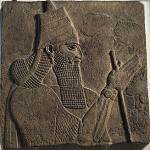
Tiglath-Pileser III, originally named Pulu, was a prominent king of the Neo-Assyrian Empire who reigned from 745 to 727 BCE. His origins are somewhat obscure, but he likely rose to power through a coup, possibly with the support of military factions. Upon ascending the throne, he implemented sweeping reforms to strengthen Assyria’s military and administrative structures. His reign marked a turning point in Assyrian history, transforming it into a highly centralized and expansionist empire. Tiglath-Pileser III led numerous military campaigns, conquering vast territories, including parts of modern-day Syria, Israel, and Iraq. He also introduced policies such as mass deportations of conquered peoples to prevent rebellions. He died in 727 BCE, leaving behind a legacy of imperial dominance and innovation.
Historical Context
Tiglath-Pileser III ruled during a period of significant upheaval in the ancient Near East. The Assyrian Empire, once a regional power, had weakened due to internal strife and external pressures. His reforms revitalized Assyria, enabling it to dominate the region for over a century. His military campaigns were part of a broader strategy to secure resources, trade routes, and buffer zones against rival powers like Urartu and Babylon. His reign also coincided with the decline of smaller kingdoms, such as Israel and Damascus, which were absorbed into the Assyrian Empire. Tiglath-Pileser III’s policies set the stage for later Assyrian rulers, including Sargon II and Sennacherib, who further expanded the empire’s reach.
Beliefs
Tiglath-Pileser III, like other Assyrian kings, adhered to the traditional Mesopotamian religious beliefs centered around the worship of gods such as Ashur, the patron deity of Assyria. He presented himself as the chosen representative of Ashur, using religion to legitimize his rule and military campaigns. His inscriptions often attribute his successes to divine favor, reinforcing the idea that his conquests were part of a divine plan to expand Assyria’s dominion.
Key Achievements
- Military Reforms: Restructured the Assyrian army into a professional, standing force, improving its efficiency and effectiveness.
- Administrative Reforms: Centralized the empire’s governance, reducing the power of provincial governors to prevent rebellions.
- Expansion of the Empire: Conquered vast territories, including Syria, Phoenicia, and parts of Israel, significantly expanding Assyria’s borders.
- Mass Deportations: Implemented a policy of forcibly relocating conquered peoples to disrupt local identities and prevent uprisings.
- Economic Policies: Strengthened Assyria’s economy by securing trade routes and tribute from conquered regions.
- Diplomatic Strategies: Formed alliances and vassal relationships with smaller kingdoms to extend Assyrian influence without direct conquest.
- Infrastructure Development: Built and maintained roads and fortifications to improve communication and defense across the empire.
- Cultural Influence: Promoted Assyrian culture and language in conquered territories, fostering a sense of imperial identity.