Links
Life events
Wikipedia ↗
Wikipedia ↗
Wikipedia ↗
Wikipedia ↗
Wikipedia ↗
Wikipedia ↗
Wikipedia ↗
Wikipedia ↗
Wikipedia ↗
Wikipedia ↗
Wikipedia ↗
Wikipedia ↗
Wikipedia ↗
Article
Life Summary
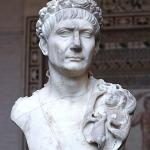
Marcus Ulpius Nerva Traianus, commonly known as Trajan, was born on September 18, 53 CE, in the Roman province of Hispania Baetica (modern-day Spain). His family was of Italian and Iberian descent, and his father was a prominent senator and general. Trajan followed a typical Roman aristocratic career, serving as a military tribune, legate, and governor in various provinces. He gained favor with Emperor Nerva, who adopted him as his heir in 97 CE. Upon Nerva’s death in 98 CE, Trajan became emperor, ruling until his death on August 8, 117 CE. His reign is often considered one of the most prosperous and stable in Roman history.
Trajan’s early military career included service in Syria and Germany, where he distinguished himself as a capable commander. As emperor, he focused on consolidating and expanding the Roman Empire, launching successful campaigns in Dacia (modern-day Romania) and Mesopotamia (modern-day Iraq). His military successes brought immense wealth to Rome, funding extensive public works, including Trajan’s Forum, Trajan’s Column, and Trajan’s Market. He also implemented social welfare programs, such as the alimenta, which provided financial support to poor children in Italy. Trajan died in 117 CE while returning to Rome from his eastern campaigns, likely due to a stroke. He was deified by the Roman Senate and succeeded by his cousin Hadrian.
Historical Context
Trajan’s reign marked the height of the Roman Empire’s territorial expansion and its golden age under the so-called "Five Good Emperors." His rule followed the chaotic Year of the Four Emperors (69 CE) and the reign of Domitian, which had been marked by tyranny and instability. Trajan’s adoption by Nerva set a precedent for the peaceful transfer of power through adoption rather than hereditary succession, ensuring stability and competent leadership. His military campaigns in Dacia and Mesopotamia were driven by both strategic and economic motives, securing Rome’s borders and enriching the empire with gold and resources. Trajan’s public works and welfare programs reflected his commitment to improving the lives of Roman citizens, reinforcing the idea of the emperor as a benevolent ruler. His reign is often seen as a model of good governance, earning him the title Optimus Princeps ("the best ruler").
Beliefs
Trajan was a traditionalist in matters of religion and governance, adhering to the Roman state cult and promoting the worship of the gods. He was tolerant of other religions, including Christianity, though he did not actively support them. His correspondence with Pliny the Younger regarding the treatment of Christians reveals a pragmatic approach, instructing that they should not be sought out but punished if they refused to renounce their faith. Trajan also believed in the importance of military strength and imperial expansion, viewing them as essential to Rome’s security and prosperity. His policies reflected a balance between authoritarian rule and populist measures, ensuring both the loyalty of the army and the support of the people.
Key Achievements
- Conquest of Dacia (101–106 CE): Trajan’s campaigns in Dacia resulted in the annexation of the region, bringing vast gold reserves to Rome and securing the empire’s northern frontier.
- Expansion into Mesopotamia (114–117 CE): Trajan’s eastern campaigns temporarily extended Roman control into Mesopotamia, though these gains were later abandoned by his successor, Hadrian.
- Construction of Trajan’s Forum and Column: These monumental structures in Rome commemorated his victories and served as symbols of imperial power and architectural innovation.
- Trajan’s Market: The world’s oldest known shopping mall, showcasing Roman engineering and urban planning.
- Alimenta Program: A welfare system providing financial support to poor children in Italy, improving literacy and reducing poverty.
- Military Reforms: Trajan strengthened the Roman legions, improved logistics, and ensured the loyalty of the army through generous rewards.
- Infrastructure Projects: He oversaw the construction of roads, aqueducts, and harbors, facilitating trade and communication across the empire.
- Stable and Prosperous Reign: Trajan’s rule is often regarded as a high point in Roman history, marked by economic prosperity, military success, and effective governance.