Links
Life events
Wikipedia ↗
Wikipedia ↗
Wikipedia ↗
Wikipedia ↗
Wikipedia ↗
Wikipedia ↗
Article
Life Summary
Ur-Nanshe was the first king of the First Dynasty of Lagash, a prominent Sumerian city-state in ancient Mesopotamia. His reign is traditionally dated to the 26th century BCE, though exact dates remain uncertain. He is believed to have been a usurper or a ruler who rose to power through military or political means, as he was not of royal lineage. Ur-Nanshe is best known for his extensive building projects, particularly the construction and restoration of temples dedicated to the gods of Sumer. His inscriptions, written in Sumerian cuneiform, provide valuable insights into early Mesopotamian kingship and governance. He was succeeded by his son, Akurgal, and later by his grandson, Eannatum, who further expanded Lagash’s influence. Ur-Nanshe’s death is not well-documented, but his legacy endured through his contributions to Lagash’s early prominence.
Historical Context
Ur-Nanshe ruled during the Early Dynastic Period of Mesopotamia, a time of intense competition among city-states such as Ur, Uruk, and Lagash. This era was marked by the rise of complex urban societies, the development of writing (cuneiform), and the establishment of early kingship. Lagash, under Ur-Nanshe, emerged as a significant political and religious center, challenging the dominance of other cities. His reign reflects the broader trends of the period, including the centralization of power, the growth of temple institutions, and the use of monumental architecture to legitimize rule. Ur-Nanshe’s inscriptions are among the earliest known royal texts, highlighting the importance of written records in asserting authority and documenting achievements. His rule set the stage for Lagash’s later expansion under his successors, particularly Eannatum, who famously defeated the rival city of Umma.
Beliefs
Ur-Nanshe, like other Sumerian rulers, adhered to the polytheistic religion of Mesopotamia. He emphasized the construction and restoration of temples, demonstrating his devotion to the gods, particularly Ningirsu, the patron deity of Lagash. His inscriptions often attribute his successes to divine favor, reflecting the belief that kings ruled as intermediaries between the gods and humanity. Temple-building was not only a religious duty but also a means of consolidating power, as temples served as economic and administrative hubs. Ur-Nanshe’s piety was a cornerstone of his legitimacy as a ruler, aligning his reign with the divine order.
Key Achievements
- Established the First Dynasty of Lagash, laying the foundation for the city-state’s political and military influence in Sumer.
- Constructed and restored temples, including those dedicated to Ningirsu and other Sumerian deities, reinforcing Lagash’s religious significance.
- Commissioned early royal inscriptions, providing some of the first written records of Mesopotamian kingship and governance.
- Strengthened Lagash’s economy and infrastructure, facilitating trade and agricultural development in the region.
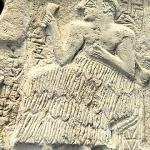
- Promoted artistic and cultural advancements, as evidenced by the surviving reliefs and artifacts from his reign.
- Secured Lagash’s independence and influence, setting the stage for its later expansion under his successors, particularly Eannatum.