Links
Life events
Wikipedia ↗
Wikipedia ↗
Wikipedia ↗
Wikipedia ↗
Wikipedia ↗
Wikipedia ↗
Wikipedia ↗
Wikipedia ↗
Wikipedia ↗
Article
Life Summary
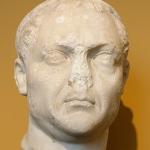
Publius Licinius Valerianus, known as Valerian, was born around 195 CE into a distinguished Roman senatorial family. Little is known about his early life, but he served as a consul under Emperor Decius and later as a military commander. In 253 CE, following the death of Emperor Trebonianus Gallus, Valerian was proclaimed emperor by his troops. He ruled jointly with his son, Gallienus, dividing responsibilities: Valerian took the eastern provinces to combat the Sassanid Persians, while Gallienus managed the western front.
Valerian’s reign was marked by continuous military crises, including invasions by the Goths and Persians. In 260 CE, during a campaign against the Sassanid Empire, Valerian was defeated and captured by King Shapur I near Edessa (modern Şanlıurfa, Turkey). His capture was a unprecedented humiliation for Rome, as he became the first Roman emperor to be taken as a prisoner of war. Accounts of his fate vary; some sources claim he was treated harshly, while others suggest he lived in relatively decent conditions until his death, which likely occurred in captivity around 260 or 264 CE.
Historical Context
Valerian’s reign occurred during the Crisis of the Third Century (235–284 CE), a period of near-collapse for the Roman Empire. This era was characterized by frequent civil wars, barbarian invasions, economic instability, and the rapid turnover of emperors. Valerian’s capture by the Persians was a symbolic low point, highlighting Rome’s vulnerability and the growing strength of the Sassanid Empire under Shapur I. His defeat underscored the challenges Rome faced in maintaining its vast borders and defending against multiple threats simultaneously.
Valerian’s rule also reflected the shift toward military dominance in Roman politics. Unlike earlier emperors who rose through senatorial ranks, Valerian’s authority was firmly rooted in his military command. His joint rule with Gallienus set a precedent for shared governance, a model later adopted by other emperors attempting to stabilize the empire. Despite his ultimate failure, Valerian’s efforts to address the crises of his time were part of a broader struggle that eventually led to the reforms of Diocletian and the restoration of imperial stability.
Beliefs
Valerian was a traditionalist in matters of religion and state. He initially tolerated Christianity but later reversed this policy, issuing edicts in 257 and 258 CE that targeted Christian clergy and property. These persecutions were part of a broader effort to restore Roman religious unity and suppress what was perceived as a subversive sect. His actions against Christians were severe but short-lived, as his capture in 260 CE ended his ability to enforce these policies. Valerian’s religious stance reflected the broader Roman state’s anxiety over the growing influence of Christianity and its potential to undermine traditional Roman values.
Key Achievements
- Stabilization Efforts: Attempted to restore order during the Crisis of the Third Century by dividing imperial responsibilities with his son, Gallienus, to manage multiple military fronts.
- Military Campaigns: Led campaigns against the Goths and Persians, aiming to secure Rome’s eastern borders and reassert Roman dominance.
- Administrative Reforms: Implemented measures to strengthen the Roman economy and military, though many were cut short by his capture.
- Persecution of Christians: Issued edicts in 257 and 258 CE targeting Christian clergy and property, marking one of the more severe Roman persecutions of the faith.
- Symbolic Impact: His capture by the Persians became a lasting symbol of Roman vulnerability and the shifting balance of power in the ancient world.