Links
Life events
Wikipedia ↗
Wikipedia ↗
Wikipedia ↗
Wikipedia ↗
Wikipedia ↗
Wikipedia ↗
Wikipedia ↗
Wikipedia ↗
Wikipedia ↗
Article
Life Summary
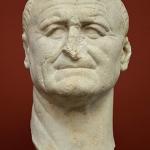
Titus Flavius Vespasianus was born on November 17, 9 CE, in Falacrine, Italy, to a family of modest equestrian status. His father, Titus Flavius Sabinus, was a tax collector, and his mother, Vespasia Polla, came from a more distinguished family. Vespasian pursued a military career, serving in Thrace, Crete, and Cyrene before rising through the ranks under Emperor Claudius. He gained prominence during the Roman invasion of Britain in 43 CE, where he commanded the Legio II Augusta with distinction. Later, he governed Africa and held the consulship in 51 CE.
In 66 CE, Emperor Nero appointed Vespasian to suppress the Jewish Revolt in Judea. He was in the midst of this campaign when Nero died in 68 CE, triggering the Year of the Four Emperors (69 CE). After the rapid succession of Galba, Otho, and Vitellius, Vespasian emerged victorious, supported by the eastern legions and the Praetorian Guard. He was proclaimed emperor on July 1, 69 CE, and his reign marked the beginning of the Flavian dynasty.
Vespasian ruled for a decade, focusing on restoring stability, rebuilding Rome’s finances, and consolidating imperial authority. He initiated major construction projects, including the Flavian Amphitheatre (later known as the Colosseum), and reformed the tax system to replenish the treasury. He also expanded the empire’s borders, securing frontiers in Britain and the East. Vespasian died of natural causes on June 23, 79 CE, in Aquae Cutiliae, Italy, and was succeeded by his son Titus.
Historical Context
Vespasian’s rise to power occurred during one of Rome’s most turbulent periods, the Year of the Four Emperors (69 CE), which followed the suicide of Nero and the collapse of the Julio-Claudian dynasty. The empire was fractured by civil war, economic instability, and military unrest. Vespasian’s victory restored order and established the Flavian dynasty, which ruled Rome for 27 years. His reign is often seen as a turning point, marking the transition from the chaos of 69 CE to a period of relative stability and prosperity.
Vespasian’s background as a military commander and his pragmatic approach to governance set him apart from his predecessors. Unlike the aristocratic Julio-Claudians, he was a self-made man who emphasized discipline, fiscal responsibility, and public works. His policies laid the foundation for the empire’s recovery and expansion under his sons Titus and Domitian. His construction projects, such as the Colosseum, symbolized Rome’s resilience and cultural vitality.
Beliefs
Vespasian was known for his practicality, frugality, and skepticism of extravagance. He believed in the importance of a strong military, efficient administration, and financial prudence. Unlike some of his predecessors, he was not overly concerned with divine or imperial cults, though he did promote the worship of the Roman gods as a unifying force. His famous last words, reportedly, were "Vae, puto deus fio" ("Alas, I think I am becoming a god"), reflecting his dry humor and down-to-earth personality.
Key Achievements
- Restored Stability After Civil War: Ended the Year of the Four Emperors and established the Flavian dynasty, bringing peace and order to Rome.
- Financial Reforms: Replenished the imperial treasury through tax reforms, including the infamous "urine tax" on public latrines, and reduced corruption in the administration.
- Construction Projects: Initiated the construction of the Flavian Amphitheatre (Colosseum), the Temple of Peace, and the restoration of the Capitol, revitalizing Rome’s infrastructure.
- Military Campaigns: Successfully suppressed the Jewish Revolt (66–73 CE), culminating in the siege and destruction of Jerusalem in 70 CE.
- Expansion of the Empire: Strengthened Roman control in Britain, securing the frontier and expanding the province’s territory.
- Administrative Reforms: Reorganized the imperial bureaucracy, promoting capable administrators and reducing the influence of the Senate in favor of the emperor’s authority.
- Cultural Patronage: Supported the arts and public entertainment, fostering a sense of Roman identity and civic pride.
- Succession Planning: Ensured a smooth transition of power to his son Titus, securing the Flavian dynasty’s future and Rome’s stability.