Links
Life events
Wikipedia ↗
Wikipedia ↗
Wikipedia ↗
Wikipedia ↗
Wikipedia ↗
Wikipedia ↗
Wikipedia ↗
Article
Life Summary
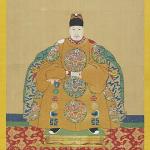
Zhu Yijun, known posthumously as the Wanli Emperor, was born on September 4, 1563, and ascended to the throne at the age of nine in 1572, following the death of his father, the Longqing Emperor. His reign, which lasted until his death on August 18, 1620, was one of the longest in Chinese history. Initially, his rule was guided by the influential Grand Secretary Zhang Juzheng, who implemented reforms to strengthen the Ming dynasty. However, after Zhang’s death in 1582, the Wanli Emperor took full control and became increasingly disillusioned with governance, often retreating from state affairs. His later years were marked by political stagnation, financial crises, and military challenges, including the costly Imjin War with Japan and rebellions within the empire.
Historical Context
The Wanli Emperor’s reign (1572–1620) occurred during the late Ming dynasty, a period characterized by both cultural flourishing and gradual decline. The Ming dynasty was one of China’s most prosperous and stable eras, but by the late 16th century, it faced mounting challenges: corruption, fiscal mismanagement, and external threats. The Wanli Emperor’s withdrawal from governance exacerbated these issues, leading to a weakened central authority. His reign also saw the rise of the Donglin movement, a reformist faction that sought to combat corruption and restore Confucian values. Despite these challenges, the late Ming period was a golden age for literature, art, and commerce, with figures like the playwright Tang Xianzu and the philosopher Wang Yangming leaving lasting legacies. The Wanli Emperor’s rule is often seen as a turning point in Ming history, marking the beginning of the dynasty’s irreversible decline.
Beliefs
The Wanli Emperor was a follower of Confucianism, the dominant philosophical and ethical system of imperial China. However, his personal beliefs were also influenced by Daoist and Buddhist traditions, as was common among Chinese emperors. He patronized Buddhist temples and engaged in Daoist rituals, reflecting the syncretic nature of Chinese spirituality. Despite his Confucian upbringing, his later years were marked by a growing disinterest in governance, which some historians attribute to his belief in the inevitability of fate or his frustration with the constraints of imperial duty.
Key Achievements
- Early Reforms Under Zhang Juzheng: During the first decade of his reign, the Wanli Emperor’s rule was guided by Zhang Juzheng, who implemented fiscal and administrative reforms that temporarily stabilized the Ming economy and strengthened the dynasty’s defenses.
- Longest Reign of the Ming Dynasty: His 48-year rule was the longest of any Ming emperor, providing a period of extended stability, albeit with growing challenges in his later years.
- Cultural Patronage: The Wanli Emperor supported the arts and literature, contributing to the cultural flourishing of the late Ming period. His reign saw the publication of important works, including the Yongle Encyclopedia supplement and the Siku Quanshu (though the latter was completed after his death).
- Defense Against External Threats: Despite his later disengagement, the Wanli Emperor oversaw military campaigns that repelled Mongol incursions and supported Korea during the Imjin War (1592–1598) against Toyotomi Hideyoshi’s Japan, preserving Ming influence in East Asia.
- Construction of the Dingling Mausoleum: He commissioned the construction of his own tomb, the Dingling Mausoleum, which is one of the most well-preserved Ming tombs and a UNESCO World Heritage Site.
- Economic Policies: His reign saw the continued use of silver as a medium of exchange, which facilitated trade but also contributed to inflation and economic instability in the long term.