Links
Life events
Wikipedia ↗
Wikipedia ↗
Wikipedia ↗
Wikipedia ↗
Wikipedia ↗
Wikipedia ↗
Wikipedia ↗
Wikipedia ↗
Wikipedia ↗
Wikipedia ↗
Article
Life Summary
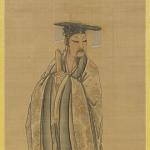
Yu the Great, also known as Da Yu (大禹), is a semi-mythical figure in Chinese history traditionally regarded as the founder of the Xia Dynasty (c. 2070–1600 BCE), China’s first dynasty. According to ancient texts like the Shujing (Book of Documents) and Shiji (Records of the Grand Historian), Yu was born to Gun, a noble tasked by Emperor Yao with controlling the devastating Great Flood that plagued ancient China. When Gun’s efforts failed—using a method of blocking the waters with earth—he was executed by Emperor Shun, Yao’s successor. Yu inherited his father’s mission and, after thirteen years of relentless labor, succeeded by dredging rivers and channels to divert floodwaters into the sea, a method known as "channeling the waters."
Yu’s leadership and selflessness earned him the throne from Shun, who abdicated in his favor, establishing the precedent of meritocratic succession (later known as the Abdication System). Yu ruled for over a decade, organizing China into nine provinces, standardizing weights and measures, and promoting agriculture. He is said to have died while on a hunting trip in Kuaiji (modern Zhejiang) and was succeeded by his son Qi, marking the beginning of hereditary monarchy in China. His tomb is traditionally located in Shaoxing, Zhejiang Province.
Historical Context
Yu the Great emerges from the Neolithic to Bronze Age transition in China, a period marked by the rise of complex societies along the Yellow and Yangtze Rivers. The Great Flood, a catastrophic event likely occurring around 2000 BCE, would have devastated early agricultural communities, making flood control a critical challenge. Yu’s legend reflects the shift from tribal confederations (like those under Yao and Shun) to centralized statehood, a foundational moment in Chinese political history. His story was later idealized by Confucian scholars as a model of virtuous leadership (de), emphasizing diligence, humility, and service to the people. The Xia Dynasty, though archaeological evidence remains debated, symbolizes the birth of Chinese civilization and the Mandate of Heaven—a concept later used to legitimize dynastic rule.
Yu’s legacy also intersects with myth and cosmology. In Daoist traditions, he is associated with the Yellow River Map and Luoshu, mystical diagrams linked to flood control and harmony. His efforts to tame nature align with broader East Asian themes of human ingenuity overcoming chaos, a narrative echoed in other cultures (e.g., the Mesopotamian Gilgamesh and Utnapishtim). While some historians question the historicity of Yu and the Xia, recent archaeological discoveries at Erlitou (Henan Province) suggest a proto-state society that may correspond to early Xia traditions.
Beliefs
Yu’s life and achievements embody several core Chinese philosophical and cultural beliefs:
- Mandate of Heaven (天命): His rise to power was seen as divinely sanctioned, a concept later formalized to justify dynastic rule. His success in controlling the flood demonstrated Heaven’s favor.
- Meritocracy and Selflessness: Confucian texts praise Yu for his thirteen years of toil, during which he allegedly passed his home three times without entering, symbolizing devotion to duty over personal comfort.
- Harmony with Nature: Unlike his father’s failed approach of blocking the waters, Yu’s method of dredging and channeling reflected an understanding of natural forces, a principle later central to Daoist thought.
- Dynastic Founding: Yu’s establishment of the Xia Dynasty set a precedent for hereditary succession, a system that defined Chinese governance for millennia.
- Agricultural Primacy: His focus on flood control and land reclamation underscored the importance of agriculture in sustaining civilization, a cornerstone of Chinese statecraft.
Key Achievements
- Controlled the Great Flood: Successfully diverted floodwaters through dredging and channeling, allowing agricultural recovery and settlement expansion. This feat became a cornerstone of Chinese hydraulic engineering.
- Founded the Xia Dynasty: Established China’s first dynasty, transitioning from tribal rule to a centralized state and ending the Abdication System in favor of hereditary monarchy.
- Organized the Nine Provinces (九州): Divided China into nine administrative regions, each with standardized tributes, laying the groundwork for later bureaucratic governance.
- Standardized Weights and Measures: Introduced uniform systems for trade and taxation, facilitating economic integration across regions.
- Promoted Agriculture: Encouraged land reclamation and irrigation, boosting food production and supporting population growth.
- Established the Yu Lineage: His son Qi’s succession marked the beginning of dynastic inheritance, a model followed by later dynasties like the Shang and Zhou.
- Cultural Symbolism: Became a paradigm of virtuous leadership in Confucian thought, often cited in texts like the Analects and Mencius as an exemplar of ren (benevolence) and yi (righteousness).
- Archaeological Legacy: While debated, sites like Erlitou may reflect early Xia material culture, linking Yu’s legend to tangible Bronze Age developments.