Links
Life events
Wikipedia ↗
Wikipedia ↗
Wikipedia ↗
Wikipedia ↗
Wikipedia ↗
Wikipedia ↗
Wikipedia ↗
Wikipedia ↗
Wikipedia ↗
Wikipedia ↗
Article
Life Summary
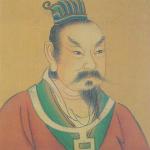
Zhu Wen (朱温), later known as Emperor Taizu of Later Liang (後梁太祖), was born on December 5, 852, in Dangshan County, present-day Anhui Province, China. Originally named Zhu Quanzhong (朱全忠), he began his career as a rebel soldier under the leadership of Huang Chao during the late Tang dynasty. After Huang Chao’s rebellion failed, Zhu Wen surrendered to the Tang court and was granted a military command. Over time, he consolidated power, eliminating rivals and expanding his influence. In 907, he forced the last Tang emperor, Emperor Ai, to abdicate, declaring himself emperor and establishing the Later Liang dynasty. His reign was marked by military campaigns and political intrigue. Zhu Wen was assassinated by his son, Zhu Yougui, on July 18, 912, ending his tumultuous rule.
Historical Context
Zhu Wen’s rise to power occurred during the decline of the Tang dynasty, a period characterized by widespread rebellion, regional warlordism, and economic instability. The Tang dynasty, once a golden age of Chinese civilization, had weakened due to internal corruption, heavy taxation, and the devastating An Lushan Rebellion in the 8th century. By the late 9th century, regional military governors (jiedushi) held significant autonomy, and the central government struggled to maintain control. Zhu Wen’s seizure of power in 907 marked the official end of the Tang dynasty and the beginning of the Five Dynasties and Ten Kingdoms period, a time of fragmentation and conflict in China. His establishment of the Later Liang dynasty set a precedent for the rapid succession of short-lived dynasties that followed, as military leaders vied for dominance. Zhu Wen’s actions reflected the broader trends of the era: the collapse of centralized authority and the rise of regional strongmen.
Beliefs
Zhu Wen was a pragmatic and ruthless leader, prioritizing power and stability over ideological or moral considerations. His early association with Huang Chao’s rebellion suggests a willingness to challenge the established order, though he later abandoned the rebel cause to serve the Tang court. As emperor, he adopted Confucian rituals and titles to legitimize his rule, but his governance was largely driven by military and political expediency. He was known for his brutality, particularly in eliminating rivals and consolidating power, which earned him a reputation as a tyrant. His beliefs were shaped by the chaotic environment of the late Tang dynasty, where survival and dominance often required extreme measures.
Key Achievements
- Founding the Later Liang Dynasty: Overthrew the Tang dynasty in 907, establishing the Later Liang as the first of the Five Dynasties, marking the beginning of a new era in Chinese history.
- Military Consolidation: Successfully defeated rival warlords and regional governors, expanding his control over northern China and unifying much of the Central Plains under his rule.
- Administrative Reforms: Implemented policies to stabilize the economy, including tax reforms and efforts to restore agricultural production, though his reign remained plagued by warfare and instability.
- Cultural Patronage: Despite his ruthless reputation, Zhu Wen supported Confucian scholars and promoted cultural activities, attempting to legitimize his rule through traditional Chinese governance ideals.
- Strategic Alliances: Formed alliances with other regional powers, such as the Khitan Liao dynasty, to strengthen his position and counterbalance rival factions.
- Construction Projects: Initiated infrastructure projects, including the repair of canals and fortifications, to improve trade and defense in his territories.